You’re reading Entrepreneur Asia Pacific, an international franchise of Entrepreneur Media.
The Great Resignation and the ongoing flood of colleagues leaving the office chair next to us empty have left us with some doubts: Am I satisfied with my current job? Could I feel more recognized and fulfilled somewhere else?
If you’ve ever felt underappreciated, even as you work to go the extra mile, there’s a good chance you belong to a category of employees who rarely make it onto managers’ radars despite being mega talented: the “silent stars’. These unsung heroes often ensure success for their teams without visibly seeking recognition. As invaluable as they are underappreciated, silent stars are often self-starters, willing to take on less visible or even thankless tasks. But that doesn’t mean they revel in their anonymity.
You may be one of them and halfway out the door. Perhaps you’re still perplexed by how you managed to remain invisible even though you excelled; or by how you never grasped an opportunity to climb the corporate ladder. That said, you’re not alone. Many of those employees who recently quit believed their opportunities for advancement were limited (63 per cent) or perceived little respect at work (57 per cent). Organizations everywhere are on the brink of losing silent stars like you: team members who have long cared more about doing good work than advocating for their interests.
It’s time for silent stars among us to consider your value, your own needs, and how a new mindset will help you meet them.
Am I a “Silent Star’?
If you are what I call a “silent star’, you’ve likely never thought of yourself in these terms. It could be that – perhaps to your credit – you’ve paid more attention to the task at hand than assessing how you fit into the office hierarchy (and your role within it). But job fulfilment is everything, and self-assessment is an important step along that path.
Silent stars are core team members who don’t concern themselves with publicizing their wins, or who by nature refrain from identifying themselves. They are not, however, content with anonymity, and the lack of recognition can lead even the best and brightest to disengage. Oftentimes these silent stars don’t seek to follow a conventional path up the company ladder. They don’t, in other words, “play the game,’ even when they have ambitions for career growth.
In my experience, these all-important contributors can be further broken down into two groups. “Rock stars’ are independent-minded team members consistently doing great work with almost no oversight. They’re the ones that colleagues turn to for help, and when they need to, be certain something will get done well. For rock stars, fulfilment is much less about career advancement and more about acknowledgment and encouragement. If you’re a rock star, you’re likely silently hoping for more public praise, whether through employee recognition programs, positive feedback on calls and emails, or even bonuses.
“Rising stars,’ on the other hand, are equally talented and equally reliable but stand apart for their eagerness, speedy turnaround times, and their desire for recognition and career advancement. Rising stars are also hoping for the chance to engage with the higher-ups, and to receive acknowledgment in the presence of executives. If you’re a rising star, finding opportunities for growth is essential to keeping you engaged.
Both types of silent stars are often overlooked or even taken for granted. And with remote work models only encouraging the tendency to neglect silent stars, steps should be taken to keep these hidden gems engaged and happy.
To start, if recognition is crucial to keeping you locked-in and gratified, resist your tendency to stay passive in hopes of receiving it. If tooting your own horn doesn’t come naturally, praising others around you can serve as a great workaround. By recognizing those you work with, you’ll cultivate a culture of mutual recognition and encourage co-workers to sing your praises in turn.
Another important means of getting your share of the limelight is committing yourself to take risks. Utilize your knack as a self-starter and your autonomy by acting as a leader and flexing your muscles. Whether this means suggesting and/or undertaking new projects, implementing new strategies, or mentoring new team members, take ownership where appropriate and experiment. Perhaps counterintuitively, embracing your autonomy and taking the risk of going it alone will help you get noticed.
In taking such initiative, you should also ensure that you’re drawing the attention of leadership by frequently sharing your ongoing projects and results with your team and supervisors. Sharing insights you’ve gained through new projects can be especially helpful for garnering praise.
At the same time, supplement this reporting with hard evidence of your role as a leader and influencer among your peers. There are a number of new tools that assess a team’s communications to find which employee others regularly go to for guidance. Log these informal interactions and find ways to get this data in front of your supervisors.
As a silent star, and especially as a rock star, acknowledgment is both elusive and essential. Rather than giving up, try to take steps to earn what you deserve.
The Ladder’s Yours to Climb
For rising stars, taking stock of how much you’ve advanced in your career may be quite discouraging. You’ve consistently overachieved and yet may feel you have little to show for it. With time, this severs the connection you have with the work you do.
When rising stars don’t climb the ladder, it’s frequently because they’ve misunderstood how it’s done. In their eyes, one’s dedication to doing fantastic work will inevitably come to light; it’s only a matter of time.
The first step toward getting unstuck is to unlearn this assumption. Sooner or later, you’ve got to learn to navigate the career landscape. So, start with the basics.
Rising stars should take the time to draft out short and long-term goals and how they aim to achieve them. Everything starts with a plan, and if you’ve never formally mapped goals for your career, consider using the SMART framework. Once you have them, don’t hesitate to show these aims to your managers. Better yet, ask for their advice on what sort of metrics you might use to measure your progress.
You’ll need to consider what skills and qualifications you need to obtain these goals. There are many online courses today – whether it’s a marketing certification or cloud technology course – and rising stars should not be afraid to jump into the deep end. Take these skills from the theoretical realm to the practical by identifying opportunities within the company to put them into practice.
Mentorships are also extremely beneficial, especially for those with instincts towards being a heads-down, self-starter. Mentors who’ve made the gains you aspire to can help explain the path forward and reinforce your commitment to all the advice this article has offered.
Again, seek out your manager as you seek a mentor. Getting them involved is one more way of drawing their attention, and they can likely help point you to possible mentors within the organization. Let them know you’re very interested in the chance to shadow current leaders and in Q&A moments with higher-ups.
Finally, as you commit yourself to tried-and-true steps along a path towards career advancement, make sure you’re plenty visible as you progress along! Do the opposite of flying below the radar – attend conferences, start your own blog, or engage with thought leaders through social media. By being seen and heard in the right places, you’ll cultivate your own “executive presence,’ further taking ownership of your career path.
Be Heard, Be Fulfilled
So many of us hold fast to the idea that with hard work – and only hard work – good things will come. In today’s office, however, that’s not always the whole story.
While appreciating that such a strong work ethic is a huge part of what makes them exceptional, silent stars must understand the limits of that mentality. If you seek fulfillment in your career, you’ll ultimately have to learn the ins and outs of getting recognized and advancing in your career.
In other words, you may have to check your impulse to shy away from what may have seemed non-essential aspects of your career. And as you do so, you may find that the right fit for you is actually within your current organization. Luckily for your company, you’ll have saved them the trouble of losing an irreplaceable teammate.
https://yvrbet.com/wp-content/uploads/2022/10/Silent-star.jpg10432019Dishen Maharajhttps://yvrbet.com/wp-content/uploads/2021/07/bet-logo.pngDishen Maharaj2022-10-12 09:48:452026-09-25 23:18:05You’re the Office’s Silent Star. Now, How Can You Thrive?
Starting a business is a risky endeavor, even for seasoned professionals. The good news is the common pitfalls can be avoided by identifying and understanding them.
As you enter your first enterprise, you will likely face many challenges. It’s important to understand the common mistakes made by first-time entrepreneurs so that you can preempt them.
Hiring who you know, rather than who is best
As a first-time entrepreneur, you may be tempted to hire people you know looking for work. Perhaps it’s a friend or family member who has expressed an interest in working for your company. While this can be a good way to help out someone close to you, it can also lead to problems down the road if their skills don’t match what’s required of them on the job. Hiring based on skill set rather than who you know and trust is best.
Even if you don’t want to compete on price, which many small businesses do because they can’t afford to compete on service, you still need to have something unique about your product or service to succeed. Without this unique element, your customers will go elsewhere and find someone offering something better than what you’re offering them. Their loyalty goes with them when they do that, and they may never return.
Not mastering your finances
Your financial management skills are crucial to the success of your business. Whether you’re a first-time entrepreneur or have been in business for years, there are always ways to improve your money management practices. Here are some tips for getting started:
Make a plan. You need to know where your money is going and how much of it you have at any given time. A good approach is to set up a budget and stick with it so that you don’t get over your head financially and become overwhelmed by stress.
Keep track of expenditures and revenue streams throughout each month to see where new trends may be emerging for both positive (new clients) and negative (increased expenses). This will allow you to make more informed decisions about future spending plans based on what has worked well in the past versus trying out something new without knowing how much impact it will have on cash flow over time.
As a founder, you may think that you can expect everyone to work as you do. And while it’s true that every employee should be working hard toward the success of your business, it’s important to understand that not everyone works the same way. Some people are better at communicating than others or have different strengths and weaknesses in their work performance. If you want your company to succeed and thrive, then it’s vital for you as an entrepreneur to be flexible and adaptable when dealing with employees who don’t use the same approach as yourself.
The good news is that being understanding of others’ differences doesn’t mean compromising your values; instead of trying to force employees into becoming like yourself, try looking at ways that each person fits into the bigger picture of what makes up a successful organization. By taking this mindset into account when hiring new workers, conducting performance reviews or giving feedback on projects completed by existing staff members (and even vendors), entrepreneurs can improve workplace culture by promoting positive relationships amongst all parties — including themselves.
Spending too much time in the office
A first-time entrepreneur’s most common mistake is spending too much a in their office. In the early days of your company, you need to be around the office to build culture and relationships with employees. But once you get going, you don’t need to be at work for every single hour of the day.
You will not be able to hire someone better than you at managing your team if you don’t give yourself some space from them — which means working from home occasionally or taking a few hours off during certain days.
Letting ego get the best of you
Ego is a big problem for first-time entrepreneurs. It’s easy to get caught up in our ideas, convinced that they are the best and the only ones worth building. But when you’re starting a business, it’s important to let go of your ego and listen to others around you.
Ego is also one of the biggest reasons why people hire unqualified employees. If you think everyone around you is beneath you because they don’t have your degree or experience, then it will be hard for them to give advice or help out with your business in any way other than as an employee who does exactly what he’s told without thinking twice about whether it makes sense or not.
Being an entrepreneur is hard. There are plenty of things to worry about, and you can’t do it all yourself. One of the most common mistakes first-time entrepreneurs make is doing everything themselves — which means they take on too much risk and don’t realize their true potential.
If your goal is to build a successful company, there are specific tasks you should outsource or delegate entirely to other people who can do them better than you:
Hire someone else as your accountant instead of doing your taxes every year.
Get a lawyer to review contracts before signing them instead of trying to learn the legal language yourself.
Make sure HR processes are in place so employees can get paid on time, rather than having that be your responsibility every month.
First-time entrepreneurs must be willing to learn and adapt
As you begin your new journey, it is essential to keep in mind that you are not perfect. Even the most seasoned of entrepreneurs make mistakes — and that’s okay. The key is not to make the same mistake twice. You will learn from your mistakes and adapt as you go along.
https://yvrbet.com/wp-content/uploads/2022/10/7-common-mistakes.jpg7831500Dishen Maharajhttps://yvrbet.com/wp-content/uploads/2021/07/bet-logo.pngDishen Maharaj2022-10-06 05:36:052026-09-25 23:18:06Common Mistakes First-Time Entrepreneurs Make and How to Stop Them
There are three common reasons why people don’t start their own business.
Lack of cash.
Lack of clarity.
Lack of confidence.
I suppose another reason could be they just don’t feel like it. But if that’s not the issue, and you want to start a business, I’m going to quickly eliminate the other barriers to entry referenced. The best part? You can do so without learning any new skills or setting up a fancy website.
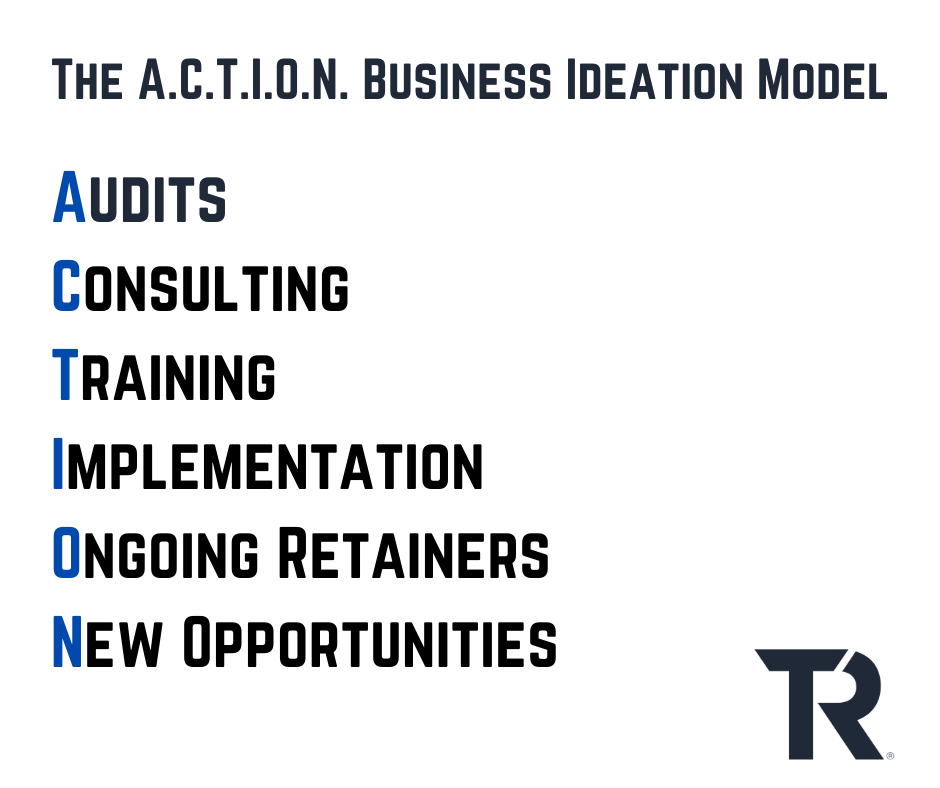
All you have to do is implement one or all parts of my A.C.T.I.O.N. business ideation model.
It’s a clear process for you to monetize your knowledge as an entrepreneur or side hustle. You’ll be surprised to learn how quickly you can start a business based on the experience you already have or can develop in a short period of time.
This article should take you about seven minutes to read and you can be ready to start generating revenue in as little as one week.
Take a self-inventory
The first step is to do a self-inventory of all the jobs you’ve had in your career. This includes paid roles as well as volunteer opportunities. You may find it helpful to review your resume or LinkedIn profile.
Then, write down all the tasks you’ve performed during those roles and assign them to various zones of competence.
Zone of Incompetence: You don’t do these tasks well.
Zone of Competence: You can do these tasks but may not enjoy them and other people are better at them.
Zone of Excellence: You are very good at these tasks and they bring you success. But, you might be getting bored with them.
Zone of Genius: You absolutely love doing these tasks and you’re phenomenal at them.
Next, take a look at the tasks in your zones of excellence and genius and decide which you’d like to offer as a professional service provider.
It’s ok to offer more than one service, but they should be complementary since you’ll be providing both services to the same audience. For example, lead generation and email marketing would go well together. Email marketing and dishwashing wouldn’t.
From here you’ll need to determine which audience you want to offer these services to. If possible, I suggest focusing on an industry you’re already familiar with. This will help you rely on your past experience and eliminate impostor syndrome.
Now, put it all together:
I offer (the services you decided on) to (the audience you’ve chosen)
For example “I offer email marketing and lead generation services to startups”
There you go — you’ve already outlined your initial service offer and audience. You’re now ready to determine which part(s) of the A.C.T.I.O.N. model you’d like to leverage and launch your business.
Tax audits can be scary, but business audits can reveal valuable areas of opportunity and optimization. Offering audits (based on the tasks you previously identified from your zone of genius or excellence) is the most hands-off way to generate revenue since you’re not responsible for any of the associated next steps.
Even if you’ve never written down the process for making sure the tasks you’ve selected are completed in an efficient manner, chances are you already have one in mind. For example, and email marketing expert would know effective lead generation involves providing value in exchange for your audience’s email address and an eye catching title is needed to capture their attention.
Your audit will cover all the associated best practices and identify areas of improvement.
Action item:
Document the step-by-step process a company or individual must follow in order to efficiently perform the tasks outlined in your service offering.
Consulting
Consultants are often seen as the go-to professionals for any business needing help. They provide expert opinions, analyses, and recommendations to organizations or individuals based on their own expertise.
Sticking with the same example – an email marketing pro – this expert can consult companies on how to create an effective email marketing strategy that aligns with their overall business goals. It’s important to offer more bespoke input and provide industry-specific examples of success, but you can follow the same process outlined in your audit for developing a winning campaign plan.
Action item:
Determine how you’ll provide consulting services including how you’ll communicate (email, phone, in-person) and how often.
Although they may sound similar, there is a vast difference between training and consulting. Consulting deals with helping companies develop strategies, whereas training focuses more on helping people develop the skills needed to implement these strategies.
In this example, the email marketing expert could teach a company’s staff different techniques of writing emails. Keep in mind, that this could be done through a series of team workshops or one-on-one training.
Action item:
Document the step by process associated with completing the tasks you’re training people on. To save time, consider creating video tutorials using tools such as Loom.
Implementation
Based on what you’ve learned during the previously mentioned services you may conclude a company doesn’t have the right tools, team or resources to reach their business goals.
Fortunately, you can be of great value by helping with the implementation and integration of these missing pieces. This can include anything from hiring new employees to finding the right vendors and partners.
Action item:
Make a list of tools and resources companies or individuals can use to achieve their desired outcome as it relates to your service offering. If possible, form an affiliate relationship with these third parties so you can generate additional revenue by suggesting them.
With an ongoing retainer you provide advice and services based on your area of expertise. You don’t necessarily have pre-determined deliverables but it’s important to be responsive and available when your client reaches out to you.
Going back to our example of an email marketing expert, this could involve quickly reviewing an outgoing email or helping a writer who can’t quite figure out an email subject line.
Action item:
Document examples of specific questions and activities you can help with on an ongoing basis. This should include daily and long-term tasks.
New Opportunities
By design, this is the most flexible part of the model. What you come up with is all based on the organization, their goals and creative ways you can help them reach their desired outcome.
You’ll often leverage this approach after you’ve worked with a company in some capacity. The reason being that you’ve already developed a trusting relationship and have a clear understanding of their operations.
Examples could include hosting a podcast on their behalf, creating educational content for their audience or even speaking at events as a company representative.
Action item:
Think of something new!
Your turn
You now have a clear plan to take A.C.T.I.O.N. and monetize your knowledge.
With no startup costs and the ability to leverage your existing skills, this model democratizes access to entrepreneurship by removing previous barriers to entry. And as a heads up, you can start or stop anywhere in the process — just get started!
A special request from me
I’m currently working on some new exciting projects to support current and emerging entrepreneurs (stay tuned), and it would mean the world to hear your thoughts directly.
If you have four minutes to spare, I’ve created this super short questionnaire and your responses will help shape the vision of my work.
And, by completing the survey you’ll also be entered to win a Lume Cube Edge Light. A feature-packed Desk Light specifically designed to enhance your appearance on Video Calls & Live Broadcasts.
Thanks in advance for your help!
https://yvrbet.com/wp-content/uploads/2022/10/6-ways-to-start-a-business-with-the-skills-you-already-have.jpg7831500Dishen Maharajhttps://yvrbet.com/wp-content/uploads/2021/07/bet-logo.pngDishen Maharaj2022-09-28 05:17:112026-09-25 23:18:076 Ways to Start a Business With the Skills You Already Have
Digital marketers are hopping on the meme trend. In some cases, brands can get more engagement with a well-timed meme than any other marketing graphics.
At least two-thirds of millennials and Gen Z regularly share memes on social media. The only content more likely to be shared is infographics and travel photos. Visual media is the most important form of communication now. Surveys have found that 55% of 13-35 year-olds send memes weekly, and at least 30% exchange memes daily. Nearly a quarter of respondents said they send memes multiple times per day.
The question on most marketers’ minds is, “How can I create viral memes?”
If your content can incorporate these five elements, your chances of going viral are much more significant.
You don’t necessarily need to treat meme generation as a marketing campaign. Often, the best memes arise organically, just waiting to be developed. Any media event can become a popular meme, even news that seems mundane, such as President Biden falling from a bicycle. It’s harmless news that becomes interpreted in hundreds of humorous ways.
Still, it would be best if you had an idea of who this content will appeal to when you’re making it. It’s impossible to predict if a meme will become viral because its popularity depends on the whims of other people. In that vein, creating content that those in your niche will feel emotionally connected to is helpful. That’s the best predictor of how successful your meme will be. A good example is the dating app OkCupid which shares relevant memes widely to boost engagement on their social media.
2. Think creatively
The best memes take recognizable content (stills from a movie, pictures from a significant news event, etc.) and put a new twist on it that causes a reaction in people.
In the U.S., memes about politics, political figureheads and inflation are persistently popular. These are topics of constant discussion, so naturally, memes follow. These issues are particularly “meme-able” because there are so many ways to add humor to situations that aren’t humorous.
The flexibility of the mind is the greatest meme-generating tool you have. The meme formats that persist often come from taking a fresh perspective on a movie, news story or media event. For example, Netflix created an Instagram page, Netflix is a joke, where their customers share memes, and that helps the company to gain more audience.
The universal love of memes stems from the fact that, as humans, we love to laugh. In today’s society, many people use memes to connect with friends or strangers over something lighthearted as a momentary escape from stress. Trend reports note that 38% of millennials and Gen Z follow social media accounts dedicated to memes.
Memes should combine what’s trending online with simple, funny text. Humor is subjective, so you may not always get it right, but memes don’t work without a sense of humor. You have to be able to embrace absurdity and laugh at yourself or a situation to generate memes that other people enjoy.
There’s even a neural network called GPT-3 that can use AI and machine learning to generate relevant, funny memes based on just a few words. There are entire meme accounts that create and post content in this way.
Memes have become a critical communication tool thanks to their relatable nature. The right meme has the unique ability to convey a tremendous amount of meaning within a simple image. Yes, memes are partly used as comic relief, but 36 percent of millennials and Gen Z use them to express feelings, and 28 percent use them when they can’t find the right words to express themselves.
This proves that a viral meme is a relatable one. In most cases, it’s important to remember that a person is looking for themselves in a meme. They want to see something recognizable in the sentiment conveyed. Gucci was one of the first fashion brands that collaborated with Instagram meme-makers to promote the collection of watches.
You don’t need a huge budget, complicated photo editors or deep cuts from pop culture to make a viral meme. However, you do need to understand that creating viral content is always a bit of a gamble.
A meme stays popular until it doesn’t. There’s usually a sharp rise and fall in popularity with memes. One thing will be trending everywhere until suddenly something new shows up, and the old meme is now largely outdated.
The spirit of a meme is to evoke feelings of all kinds in a relatable, often humorous way. Not everything will be an instant hit, and nothing will last forever.
Where will meme culture go from here?
Memes have quietly entered our lives, and they are now even more meaningful than emojis because they can convey more nuanced feelings. Everyone from the U.S. President to Elon Musk is a part of meme culture now (in both cases, they share and are featured in memes).
Anyone can now create a meme about anything. Many people can earn money by making memes and gaining a following on Instagram or Facebook. The only problem with these platforms is how algorithms work. They depend on factors like follower count and the “age” of your account.
If your brand account is new, your content might not be highlighted or recommended to others, so growing your account becomes the main hustle rather than making good content.
YouTube and TikTok have more transparent monetization systems that depend on views, so smaller brands can benefit more by creating exciting and fun content. Other platforms like Yepp share revenue from advertising and help users easily create memes and generate income from their content.
In the future, we can expect memes to become more ingrained in our communication. With the rise of topics like Web3 and digital ownership, memes may become more prevalent in the NFT and metaverse space. For now, meme potential is nearly limitless.
https://yvrbet.com/wp-content/uploads/2022/10/using-memes.jpg7831500Dishen Maharajhttps://yvrbet.com/wp-content/uploads/2021/07/bet-logo.pngDishen Maharaj2022-09-22 06:23:282026-09-25 23:18:08It’s Time to Take Memes Seriously. 5 Strategies To Incorporating Memes in Your Marketing Strategy.
To be successful in business, you need a nimble mind to react to problems faster and you need to be adept at understanding whatever is thrown your way. In short, your ability to succeed is often determined by how smart you are.
With practice, anyone can increase their knowledge base, sharpen their intellect and learn new skills. There are a number of ways to boost your cognitive ability and expand your mental capacity. We should aim to spend time every day learning something new. The more we learn and the more deeply we understand, the better we can improve our brain performance and increase our capacity to learn and thus live a smart life.
The list below includes the best ways to engage your mind and grow your intelligence so a smart person like yourself can meet the ever-mounting challenges you face. By following these seven useful tips, you can become a little smarter every week.
1. Spend time reading every day.
The mind is like a muscle: the more you use it the stronger it will become. Reading is an important element for developing your mind, as it’s one of the basic ways we gain knowledge and learn.
Through reading, you can discover new things and educate yourself on any topic. Reading also helps develop your creative side by engaging your imagination. Words, both spoken and written, are the building blocks of our social existence — and through words, you can go anywhere in the world.
If you’re looking to quickly grow your knowledge, one simple way is to speed up your reading so you can charge through books, written material and even online articles (like this one!). Most people read at an average rate of 250 words per minute. At that rate, it would take you about six minutes to read this article. But with speed reading, you could cut that time in half. Just remember, the goal is to help you rapidly consume more information, not just zoom past words without fully comprehending their meaning.
Becoming smarter takes more than just absorbing information — true wisdom comes from deeply understanding a subject. The most successful people consistently outpace everyone else because they’re able to quickly learn new skills, adapt to changes and work both collaboratively and independently.
They use a deep and meaningful knowledge of their world and a flexible mindset to understand problems and quickly come up with solutions. Their deep knowledge base gives them the foundation they need to perform.
Work to steadily build a deep and meaningful knowledge base on a few key topics and issues. Be honest with yourself about areas you are weak in and seek to reinforce your understanding of important subjects until you have a rock-solid foundation that you can build on. Knowledge is cumulative, so start with the basics. You need to have a firm grasp of how something works before you can fix it. It’s good to have a breadth of knowledge, but it’s also important to take “deep dives” to truly understand difficult and complex issues.
3. Constantly question and seek clarification.
Asking questions is the single most important factor in becoming smarter. Innovation always begins by asking questions and being curious. There is value in asking questions because it’s the way we push the boundaries of our world and our mind. That’s why it’s so important to hone a curious, open mind by constantly questioning everything.
It’s not just a matter of asking questions; you should be asking insightful questions that probe the validity of assumptions, analyze logic and explore the unknown. Practice asking questions that get to the heart of a matter and cultivate a willingness to push for answers.
Like anything else, developing this skill takes time and hard work. As you’re working, reading or engaging in activities, keep a running log of questions that come to mind about anything and everything that you’re involved with. Don’t be afraid to seek clarification when something isn’t clear.
One of the best ways to increase your intelligence involves flexing different areas of your brain. You aren’t going to get any smarter by doing the same ol’, same ol’ every day. While having a routine is a good thing (so your body knows when to get up and when it’s bedtime), you don’t want to spend your waking hours stuck in a rut.
By inviting a little novelty into your everyday life, you keep things fresh and interesting. That might mean checking out a new place for lunch, or going for a midday stroll on which you pay attention to the sights and sounds around you. You can also mix things up during working hours by simply finding new ways of doing your everyday tasks and getting out of your comfort zone.
If you’ve been working for a while on one thing, it could benefit you to try switching to something else. Look for ways to do things slightly differently. This will fend off boredom and help your mind stay sharp and focused. By mixing things up, you’ll use parts of your brain a little differently each day. This helps you increase your intelligence by forcing you to flex your brainpower in different ways — think of this as an overall workout for your brain health.
5. Review learned information.
We recall new information most crisply right after we’ve learned it. If you don’t use that information again soon after you’ve learned it, it will quickly fade from your mind. After a few days, we may only be able to recall a little of what we initially learned. In order to increase our ability to remember, we need to store this information in our long-term memory, and the best way to do this is to frequently review what we’ve learned until it’s locked in our memory banks.
Make notes while reading or researching something, or take a few minutes when you’re done and write down the main points. Then spend even a few minutes every day reviewing this material. It takes a little effort, but once it’s a habit you’ll be amazed at how well a quick review of the information will help confirm that you understand it — and help you see what areas you need to focus on.
You can also try rewriting the information or reorganizing your notes — this will actively reinforce what you’ve learned. The act of rewriting notes helps us clarify our understanding of a topic and reduces the time it takes us to “relearn” it when we need to use that knowledge in the future.
As you work to build your knowledge base, you’ll find your mind expanding and growing in new ways. If you’re filling your brain with great information, your mind is going to do its thing and start interpreting that information in a useful way. You may find that you’ve suddenly become an idea machine. You’ll start experiencing “aha moments” — those little breakthroughs where you suddenly connect one idea to another to form an even bigger and better idea.
Make sure you’re taking note of these ideas. Write them down, keep them handy and make sure you continue to refer back to them. Remember, even your biggest and best ideas are utterly useless unless you actually do something with them. If you have a stroke of genius but lose your train of thought and never go back to build on that idea or refine it — well, then you’ve just missed a great opportunity!
Not all of your new ideas are going to be winners. Some may be fleeting or simply won’t pan out. But once in a while, you might have a lightbulb moment that could change your life.
7. Allow yourself to change.
Whether we realize it or not, sometimes we hold ourselves back. There are times when even the smartest person allows themselves to become bound to obsolete or erroneous ideas and ways of thinking. To become truly intelligent, you must allow yourself to make mistakes, to take risks and leap at opportunity and learn from all these experiences.
You must allow yourself to change, to be open to new things and to ultimately become a different, better version of yourself. By opening yourself up to new sources of knowledge and pushing your mind to learn new things, you may ultimately question some of your old, foundational thinking. You may find that some of your perceptions were off, or that your viewpoints weren’t grounded in fact.
Challenge ideas, discuss them with others, hear out other sides and flex your analytical skills. But be open to changing your mind. And above all, give yourself room to grow and continue on your path to seeking wisdom. As you become smarter, success will follow.
https://yvrbet.com/wp-content/uploads/2022/10/Be-smart.jpg11242022Dishen Maharajhttps://yvrbet.com/wp-content/uploads/2021/07/bet-logo.pngDishen Maharaj2022-09-12 05:54:222026-09-25 23:18:097 Ways to Become Smarter Every Week
Looking to launch a successful business but don’t know where to start? You’re not alone. Today, tens of thousands of people are considering starting their own business, and for good reasons. On average, people can expect to have two and three careers during their work life — and with the great resignation in full effect, many are looking to become their own boss or a small business owner. Those leaving one career often think about their second or third career move being one they can run out of their own home. The good news: Starting a home-based business is within the reach of almost anyone who wants to take a risk and work hard, as are a plethora of other low-cost ideas. Here are some business ideas to get you started.
1. ACCOUNTANT
Experience, training or licensing may be needed
Create a flier outlining your services. Before you do that, you need to know what those services will be. Do you want to simply do bookkeeping for a small business? A more involved level of accounting would be to work up balance sheets, income statements, and other financial reports on a monthly, quarterly, and/or annual basis, depending on the needs of the business. Other specializations can include tax accounting, a huge area of potential work.
2. BICYCLE REPAIR
In many parts of the country, this business tends to be seasonal, but you can find ways around that. Rent a storage unit and offer to store people’s bicycles over the winter after you do a tune-up and any needed repairs on them. If you want to cater to the Lance Armstrong wannabes, you can have business all year round. These road race riders are training through snow, sleet and dark of night. Some of them work on their own bicycles, but many of them don’t, so you can get their business all year. And if you keep Saturday shop hours, you can be sure you will have a group of enthusiasts coming by to talk all things cycling.
3. BOAT CLEANING
Experience, training or licensing may be needed
Boats that are hauled out of the water for the winter or even just for mid-season repairs will need the hull cleaned. And depending on the type of boat, it is a good time to give a major cleaning everything else too–the decks, the sleeping quarters, the head, and the holds. Start by approaching homes that have a boat sitting in the yard. Or you could market your services to the marina to contract you to do the boat cleaning it offers to customers.
4. BUSINESS PLAN SERVICE
Has expansion possibilities
Offer a soup-to-nuts business plan, including market research, the business plan narrative and the financial statements. Plan your fee around the main one that the client will want and offer the others as add-on services. You can give clients an electronic file and allow them to take it from there, or you can keep the business plan on file and offer the service of tweaking it whenever necessary. Have business plan samples to show clients–and make sure to include your own!
Getting paid to drive during your free time is a great way to make extra money. It won’t likely replace a full-time paycheck but can be a lucrative extra revenue stream or side hustle. According to Nerd Wallet , here is a break down of the income you can expect: “To make an annual income of $50,000, the average Uber driver needs to provide 60.21 rides each week, while those working for Lyft need to give 83.76 rides a week, and Sidecar drivers would have had to provide 72.03 rides in a week.”
6. CLEANING SERVICE
There are many directions you can take this small business idea. If you want to work during hours when no one else does, you can focus on office clients. You can focus on retail businesses and keep your customers clumped into one or two blocks. Restaurants are in great need of daily thorough cleaning and can be a great source of steady clients. Perhaps you would be more interested in house cleaning. Many times with cleaning services you don’t have to spend lots of money on advertising or marketing because your customers will come by word of mouth.
Read This: Start Your Own Cleaning Service by Entrepreneur Press and Jacquelyn Lynn | Amazon | eBooks.com | Barnes & Noble
7. CHILDREN’S PARTY PLANNER
The children’s birthday party business is a multiple-million dollar industry, with the average American spending $500 per party. The book Start Your Own Kid-Focused Business tells you everything you need to know to get your own kid biz off the ground: from insurance costs to food and beverage selection to arranging unforgettable entertainment that gets lots of smiles and lots of referrals from happy customers.
8. CONSULTANT
Has expansion possibilities
To be a consultant, you need to have expertise in something so you can market yourself as an advisor to others looking to work in that area. Perhaps you managed several large warehouses in your career with a drugstore company, you did all the marketing for many years for a large shoe manufacturer or you set up a chain of beauty supply shops or take-out restaurants. You can use this experience to help others do similar things without making the same mistakes that you made along the way. A good calendar app will likely come in handy as time tracking is crucial to accurate billing.
Read This: Start Your Own Consulting Business by Entrepreneur Press and Eileen F. Sandlin | Amazon | eBooks.com | Barnes & Noble
9. DOG WALKING
Experience, training, or licensing may be needed
Dog walkers take pooches out for their daily constitutional one or more times a day, either individually or in small groups. In some cities across the United States, like New York, dog walking alone can be a booming business. But it’s actually more common for dog walkers to offer additional services, including playing with and feeding pets, bringing in newspapers and mail, and turning lights on and off. You could even have fun with the marketing of your business on social media.
Read This: Start Your Own Pet Business and More by Entrepreneur Press and Eileen F. Sandlin | Amazon | eBooks.com | Barnes & Noble
10. EBAY ASSISTANT
Do you have items lurking around your household that you could sell on eBay? Here’s a relatively straightforward online business idea: figure out your asking price and decide whether to auction it or put it in your eBay store. Then decide if you want a minimum bid and how long you want the auction to last. You will want to establish a PayPal account to use for transactions. The eBay website provides all the information you need to know to get up and running with an eBay business. Chatbots are offering creative new ways to help businesses with these functions.
Here are some of the freelance writing and editorial services you can provide from the quiet of your own home:
Copyediting. This is where fact checking takes place, and where grammatical, stylistic and typographical errors are caught.
Proofreading. This is the last stop for a “finished” piece. The proofreader makes sure the copyediting changes have been properly made and no new errors are created in the process.
Indexing. There are indexing courses available and you can get indexing software.
Developmental editing. A developmental editor works with a manuscript on big-picture things like organization and content issues.
Book doctoring. This is an editorial service provided for manuscripts written by experts. They create a manuscript as best they can and then a book doctor puts it into publishable shape.
Ghostwriting. As a ghost writer, you actually do the research and write the book and someone else’s name is attached as the author.
Copywriting. Also known as business writing, this is writing that promotes a product or a service.
Book writing. Do you have expertise in something professional, such as accounting or interior decorating? Or personally, like knitting? Why not write a book about it?
Magazine article writing. Magazines and newspapers are a great way to get your writing published before tackling the daunting task of writing a whole book.
Web page content provider. Providing content for a web site is a good way to make some money writing.
Read This: Start Your Own Freelance Writing Business and More by Entrepreneur Press and George Sheldon | Amazon | eBooks.com | Barnes & Noble
12. ELECTRONICS REPAIR
Has expansion possibilities
This business is similar to the computer repair business, but you will take on all sorts of electronic equipment besides just computers. With smaller electronics, you will need to be prepared to have customers bring their repair projects to you, as you would have difficulty recovering the cost of driving around picking up broken equipment and returning it. You may also want to encourage people to give you their old electronics so you can use them for parts.
13. EVENT PLANNING
Has expansion possibilities
One of the first things you need to do is visit every potential event location with which you plan to work. Work with the marketing manager to tour each site and learn what is available at each location. Start a database that will allow you to sort venues by varying features, such as the number of people each site holds, AV equipment available on site, if you will need to arrange for rental chairs, etc. Then when you are beginning to plan an event with a client, you can find out what the key parameters are for the event and easily pull up the three or four sites that meet the basic criteria. and engagement parties, etc.
Read This: Start Your Own Event Planning Business by The Staff at Entrepreneur Media and Cheryl Kimball | Amazon | eBooks.com | Barnes & Noble
14. EXPERT WITNESS SERVICE
Experience, training or licensing may be needed
One way to make money in this field is by being an expert witness yourself. If you have expertise that could be useful in legal cases, you can market yourself to attorneys to act as an expert witness. Another way to be active in the expert witness field is to play a sort of matchmaker, matching attorneys up with expert witnesses for their cases–either for the defense or for the prosecution. Expert witnesses for big money cases can be expected to fly anywhere to testify. There’s no reason your database of witnesses can’t be from all parts of the country.
15. FINANCIAL PLANNER
Experience, training or licensing may be needed
To start, you should go through the certification process so that you can label yourself a CFP (Certified Financial Planner). Your certificate shows that you have expertise and credibility, and this differentiation will help people choose you as their financial planner.
16. FLEA MARKET
Has expansion possibilities
People love to spend weekends rummaging through tables full of other people’s unwanted items, looking for treasures. Make sure to change your layout and put new stuff out for sale often. You want people to come back time and again to see what’s new. You don’t even have to have that much new stuff to make things look new. Just moving an item from a table to the top of a bookshelf might get it noticed, even though the item has been in your inventory since you first started having sales.
Read This: Flea Market America: The Complete Guide to Flea Enterprise by Cree McCree | Amazon | Barnes & Noble
17. GOLF COACH
Experience, training or licensing may be needed
Let the local public courses know about your coaching business. Cultivate relationships with the staff and encourage them to recommend you as a coach. Another place to look for potential customers is in the corporate world. Golfing is a game that business people use to develop relationships outside the office. You do need to be a better than average golfer to develop a reputation as a golf coach. You also need to be a good teacher, know how to be motivational and be willing to work with many different types of people.
18. HOME ENERGY AUDITOR
Experience, training or licensing may be needed
All homeowners are always on the lookout for ways to save on their utility bills. You can come to their aid by providing them with an audit of their house and giving them a breakdown of how they could accomplish real savings in heating, cooling and electrical use. You can go one step further and do the implementation and installation of some of your suggestions in their home yourself. Do a complete appliance audit, with efficiency ratings and calculations based on the age of the appliance. And don’t forget the water heater!
Read This: Toward a Zero Energy Home: A Complete Guide to Energy Self-Sufficiency at Home by David Johnston and Scott Gibson | Amazon | Indigo.ca | Barnes & Noble
19. HOME INSPECTION
Experience, training or licensing may be needed
In order to be a successful business owner in this field, you will want to establish contacts with real estate agents who can recommend your services to customers. The home inspection field is one where you will need to do constant updating of your education and knowledge. New products are constantly coming out on the market–if you only know about decks made of wood, you will not know how to inspect and assess the new materials on the market, such as composites that are made to look like real wood. Also keep apprised of all safety updates of materials and issues with things like off-gassing, carbon monoxide production, and other chemical precautions.
You can choose either to do the organizing work or consult on the things that the homeowner could do to better organize themselves. Have a portfolio of different organizational scenarios in different rooms in the home and talk with the homeowner about the style he or she likes. Create checklists and questionnaires to understand how the family uses the home. Are the kids wildly busy with after-school activities? Or are they usually home after school and want access to their toys? Do they share rooms? All of these things will help you tailor an organizing plan and become a hero to potential customers and families.
From Import/Export to Solar Energy
21. IMPORT/EXPORT SPECIALIST
Experience, training or licensing may be needed
If you don’t already have work experience with importing and/or exporting, you will have a longer learning curve. You can start by learning the basics and hosting educational sessions to teach others what they need to know to get started in import/export. That alone would probably gain you your first couple of clients. If you keep going with educational seminars and expand your reach to outside your immediate region, you could probably develop a sufficient and ongoing customer base very quickly, but be careful not to outpace your learning curve.
Read This: Start Your Own Import/Export Business by Entrepreneur Press and Krista Turner | Amazon | eBooks.com | Barnes & Noble
22. INTERIOR DECORATOR
Experience, training or licensing may be needed
Market your talents to building contractors. People purchasing new homes can often be overwhelmed with the choices and possibilities in home decorating. Design some questionnaires for each major element and each major room in the house. Find out how the homeowner will use the home–are there children? Pets? Does the woman of the house wear high heels? Do the home’s residents neglect to remove shoes? How will each room be used? Where might task lighting and ambient lighting be most appropriate?
23. JEWELRY MAKING
Experience, training or licensing may be needed
There are many different ways of getting into the jewelry business and different types of materials with which you can work. Working in metal will probably require the most in the way of specific tools. You need to be able to heat the metal to manipulate it, and you need metalworking tools to cut and engrave it. But there are many other materials that you can work with to make jewelry–glass, plastic, beads, feathers, even wood, to name just a few.
Read This: Start Your Own Fashion Accessories Business by Entrepreneur Press and Eileen F. Sandlin | Amazon | eBooks.com | Barnes & Noble
24. MARKETING COPYWRITER
Experience, training or licensing may be needed
If you can write copy that gets people excited about purchasing what your client has to sell, you can make good money in this business. Unless you are highly experienced from working in the copywriting field, take a course. There are online courses or classes at community colleges and universities that can give you a leg up in getting savvy at writing copy for brochures, catalogs, advertising and, of course, marketing copy for the web.
25. NOTARY PUBLIC/JUSTICE OF THE PEACE
Experience, training or licensing may be needed
In most states in the U.S., a notary public is a state officer who is authorized to witness and attest to the legalities of certain documents by signature and stamping a seal. Most states require that you pass an exam and a background check. It costs very little to become a notary and your income from notary work is negligible. A justice of the peace typically performs wedding ceremonies. States have varying rules and procedures for becoming a JP and performing services. Becoming a JP and/or notary public does not cost much money. And it is not a big moneymaking venture! Many states set the fees you can charge for JP services. JPs can add additional fees, and often do, including travel and hourly rates for additional meetings such as rehearsals, other prep time and any special requests.
26. PERSONAL CONCIERGE
This small business idea is for someone who is supremely efficient and has the ability to make things happen. People who hire you will expect things when they want them and you need to be able to come through with not only what they want, but with a personal touch and a smile on your face. The most likely clients for a personal concierge service are top executives who find themselves at the office by 7 a.m. and are there most nights until 9 p.m., leaving them very little time to do all those things that often need to be done during those very hours.
Read This: Start Your Own Personal Concierge Service by Entrepreneur Press and Ciree Linsenman | Amazon | eBooks.com | Barnes & Noble
27. PERSONAL TRAINER
Experience, training or licensing may be needed
Advertise your fitness skill and training services in places where everyone goes, like restaurants and grocery stores. Having a website and social media presence is a good idea–people want some privacy in their decision-making when it comes to getting fit. They can go to your website and determine if your approach to personal training is an approach that would work for them. It is important to emphasize the safety aspect of using a personal trainer. You can help clients get fit and avoid injury.
Read This: Start Your Own Personal Training Business by The Staff of Entrepreneur Media and Cheryl Kimball | Amazon | Indigo.ca | Barnes & Noble
28. PROPERTY MANAGEMENT
Experience, training or licensing may be needed
Your job, in the case of rental units, will be to make sure the property is running smoothly. For seasonal properties, you will most likely spend your management time making sure the property is ready for seasonal visits and well-maintained when no one is around. If the owners go away for six weeks in the winter, the property manager makes regular checks on the property. You will be the contact number if the security system operator needs to contact someone about a breach in security.
29. SMALL ENGINE REPAIR
Experience, training or licensing may be needed
Most community colleges offer some level of engine-repair courses. Another way to learn would be to take a part-time position at a repair shop or a rental facility where you could learn on the job, although you will want to be open about your plans. You should be prepared to work on push-behind lawn mowers, riding lawn mowers, generators, garden tools such as rototillers and edgers, chainsaws, wood chippers and snowblowers. You need to decide whether you’ll want to take on bigger jobs, such as tractors, snowmobiles and ATVs; space may be your decision-maker.
30. SOLAR ENERGY CONSULTANT
Experience, training or licensing may be needed
Has expansion possibilities
As a solar consultant, you can basically conduct a home inspection and give clients a report on their solar options for their particular home and site. This can range from full-fledged general solar installations that generate electricity to simple solar walkway lighting. You might want to start by working in a solar products company to become knowledgeable in the solar energy field. However, to be a consultant, it is often best not to be affiliated with any one company or product and be able to recommend products and options across the field of solar energy.
Read This: Solar Energy: Technologies and Project Delivery for Buildings by Andy Walker | Amazon | Indigo.ca | Barnes & Noble
From Tax Preparer to Graphic Design
31. TAX PREPARER
Experience, training or licensing may be needed
Most tax preparation franchises offer courses, seminars, and training to get you ready to work for them. You will learn a lot about tax preparation while working for them before going out on your own. There is a lot of educational support out there to learn tax preparation and all its complexities. And there are lots of individuals and businesses willing to spend a few hundred dollars a year to have someone else prepare their taxes and keep watch for tax breaks or tax burdens on their behalf.
32. MUSIC LESSONS
Experience, training or licensing may be needed
Turn down the volume and listen up: your music skills are in high demand and could earn you between $50-$75 an hour. There are a few ways to approach running your own music business: you can be mobile and teach in your clients’ homes, or you can run it out of your own space (a separate building or designated area of your home.) To get started, try to connect with local music schools for part-time gigs, which will allow you to see if you really like it, and also help you build a reputation with potential clients.
If you have a knack for sewing, upholstery repair might be a perfect business idea for you. One of the best ways to learn how to upholster is to get some discarded upholstered furniture and start tearing it apart. Many books and some videos are available to help you learn this trade. Often furniture ready for upholstering will also need repairs. Have a list available of furniture repair people you can recommend to your customers. Or you can take the piece in, have repair people you work with do this work for you, and add it to the overall cost. You can also learn to do this work, especially minor repairs, yourself.
Almost everyone has a few boxes of books stashed away in the house somewhere. Why not make a business out of them? In order to gain customers–especially repeat customers–you will need to have some regular shop hours. Make your shop known for something-a specific category (or two) of books, having some first editions for sale, all paperbacks a dollar and all hardcovers two bucks, and/or a swap program. Maps, illustrations, postcards, greeting cards and magazines are good sidelines to include in your shop.
35. WEDDING PLANNER
You will need to be up-to-date on wedding trends and fads, dress styles, color trends–almost everything under the sun! Offer your customers an ala carte menu of services, from helping pick flowers, the wedding gown and bridesmaid dresses to picking the venue and hiring the caterer. Before you open your business, shop at all the wedding shops, and even pretend you are a bride-to-be to see what kinds of services the wedding gown shop provides and how they treat potential customers. You need to know every detail of the business to give the accurate impression that you are the go-to person for anyone planning a wedding.
Read This: Start Your Own Event Planning Business by The Staff of Entrepreneur Media and Cheryl Kimball | Amazon | eBooks.com | Barnes & Noble
$1,500 to 3,000 to start up
36. APPLIANCE REPAIR
Experience, training or licensing may be needed
Every household has a number of appliances, large and small. You can work on your own or on contract with appliance stores to cover their warranty service calls–or, best of all, you can do some of each. Plan to start slow and build your customer base on recommendations and referrals based on work well done. Consider developing relationships with contractors to be the go-to person to install appliances in newly constructed houses.
37. COMPUTER TRAINING
Experience, training or licensing may be needed
Has expansion possibilities
If you are proficient in both Macintosh and PC, you should offer training in both types of computers. You could probably make a living helping seniors learn how to use the internet and e-mail to keep in touch with their loved ones, who are now commonly spread around the country. Err on the side of caution in this business. People do not want to know all the details about what makes a computer work. If you overload them with information from the beginning by explaining bits, bytes, and megapixels, they will stick to their paper and pencil forever.
38. DESKTOP PUBLISHER
Experience, training or licensing may be needed
You can use desktop publishing software to create newsletters, magazines, books or even marketing materials. You can create the content for your desktop publications, or you can pay a writer to create the content for you. Alternatively, you can advertise your desktop publishing services to design and create newsletters and books for others with their content.
39. FENCE INSTALLATIONS
Fences are everywhere. And they don’t last forever, so they need to be repaired and replaced with a certain amount of frequency. The most common fence material is wood. However, vinyl has become a popular fence choice due to its longevity and relative freedom from maintenance. Wrought iron is another common fencing, especially in urban environments. You can have fun shopping for vintage wrought iron fencing at salvage yards.
40. FREELANCE GRAPHIC DESIGNER
Experience, training or licensing may be needed
Despite the proliferation of the internet, print media is here to stay for the foreseeable future! Fliers, newsletters, magazines, information sheets, letters and advertisements are just a few of the types of print media that business hire freelancers to create for them. Websites and online advertising need graphic design services as well. Even if your expertise is only in design, offer the works for potential clients, including the editorial creation and the printing and even mailing of the final piece. You can line up regular freelancers for those parts of the job you can’t do.
Read This: Start Your Own Graphic Design Business by Entrepreneur Press and George Sheldon | Amazon | eBooks.com | Barnes & Noble
From Gift Baskets to Rug Cleaning
41. GIFT BASKET SERVICE
Has expansion possibilities
Finding a niche is the best way to start out in the gift basket business. Are you a dog lover, horse enthusiast, or exercise guru who could put together baskets that hold the things that people with this interest would like? Do you already create a product that a gift basket could be built around? Have you made your own soaps for the past 10 years? A gift basket that included one or two of your soaps, hand lotion, a scrub brush and manicure kit could be a lovely basket to receive.
Read This: Start Your Own Gift Basket Service by Entrepreneur Press and Cheryl Kimball | Amazon | eBooks.com | Barnes & Noble
42. GRAFFITI REMOVAL
Create an arsenal of cleaning products that can clean almost every kind of product (paint, chalk, markers) from every kind of surface (cement, wood, pavement). The best way to conduct a graffiti service is to offer a subscription-like arrangement. Once a month or whatever interval makes sense for your clients, go around to their property and clean off the graffiti. Charge them a monthly or quarterly fee and make it simple for everyone–they don’t have to think about graffiti, and you just do your job.
43. HAIRSTYLIST
Experience, training or licensing may be needed
Hairstyling is a popular business idea that can be quite lucrative with the right skill and marketing. Generally a home based hairstylist business is likely to be started by someone who has already has a cosmetology career and wants a change. If you already have your cosmetology training and license, and loads of experience under your belt working in a hairstyling salon, you probably have a following that will follow you right home without any hesitation.
Read This: Start Your Own Hair Salon and Day Spa by Entrepreneur Press and Eileen F. Sandlin | Amazon | eBooks.com | Barnes & Noble
4. HERBAL FARM STAND
As a budding entrepreneur, you’ll need to decide whether you will sell your herbs as live plants, picked or cut in bunches and packed, or dried. If you plan to market to cooks instead of gardeners, you will want to sell your herbs either fresh cut and packed in sealed bags, or dried and sold in baggies. You can also consider a “pick-your-own” arrangement; however, be aware that herbs are more delicate than most P.Y.O. products. You may save your garden a lot of strife and your plants a lot of wear and tear if you do the picking.
45. LANDSCAPER
Experience, training or licensing may be needed
If you have a knack for this type of work, a degree won’t be necessary. Most people want their yards tidied up in the spring, their lawns mowed in the summer, their leaves removed in the fall, and their shrubs and driveways ready for winter snow. You will also want to offer garden work such as spring planting of annuals and perennials; vegetable garden preparation, planting and fall cleanup; pest control and watering. You can offer tree care service. There is plenty to do in the yard that has nothing to do with plants: stone wall restoration, fencing, irrigation system installation.
Read This: Start Your Own Lawn Care or Landscaping Business by The Staff of Entrepreneur Media and Cheryl Kimball | Amazon | eBooks.com | Barnes & Noble
46. MASSAGE THERAPIST
Experience, training or licensing may be needed
You will want to become certified in massage therapy to be able to effectively market your services. Courses that lead to certification include not only information on human anatomy and physiology and the effects that massage has on both, but also on how to make a business out of the field of massage. You could do either a certification program or an associate’s degree and stay within the $5,000 scope of this book.
Read This: Start Your Own Day Spa and More by Entrepreneur Press and Preethi Burkholder | Amazon | eBooks.com | Barnes & Noble
47. MOVING SERVICE
Lots of people who are moving want to hire someone to do the heavy lifting for them. You can leave the large-scale, long-distance moving to the big moving companies. Your work can be the local, moving-across-town or to the town-next-door jobs. These are the ones that people start off thinking perhaps they could do themselves, and it will be your job to convince them otherwise. Your signs around town will tempt them to let you take care of that part of the move, while they are busy taking care of those other 500 items on their list.
48. FRANCHISE OWNER
The benefits of owning a franchise are many: you have a proven business model, a built-in brand and corporate support. And the good news, not every franchise will cost you millions of dollars to start. There are many you can start for less than $10,000, in fact, including: Dream Vacations , Cruise Planners and Jazzercise Inc.
49. PHOTOGRAPHER
Experience, training or licensing may be needed
Making money as a photographer can be done in a number of different ways. You can specialize in one area, the most common being weddings. There are niches you can explore for photography: portraits of people and their pets, families, and homes; photographs of holiday events, birthday parties or Christmas cards; the possibilities are endless.
Read This: Start Your Own Photography Business by Entrepreneur Press and Charlene Davis | Amazon | eBooks.com | Barnes & Noble
50. RUG CLEANING
You will need to learn how to work with all kinds of carpet fabrics, from synthetic to wool carpets. Decide whether you will take on valuable antique carpets and family heirlooms; if so, you will want to get specialized training in how to handle these carpets and the specialized ways of cleaning them. Learn how to get tough stains and odors out of carpets–such as dog and cat odors–and your services will be in great demand.
From Websites to Pet Sitting
51. WEBSITE DEVELOPER
Experience, training or licensing may be needed
Many courses exist (many of which, logically, are offered online) where you can learn the language of website creation and can learn about the details, like how to set up shopping cart systems, security concerns, etc. You will, of course, need to learn about each company you design for. What is the atmosphere of the company that you need to reflect in the website design–is it wild and contemporary, meaning brilliant colors and fun graphics? Or will more classic colors like black, navy blue and maroon be more appropriate?
52. BED AND BREAKFAST
Do you have a room that has its own bathroom and is private from the rest of the living space? Are you near attractions such as a tourist area, sports stadium or venue for a large annual event? Or is your home in the country with spring peepers, summer crickets and crisp fall nights that could give a city-dweller a weekend of peaceful living? Say you can rent the room for $150 a night for Friday and Saturday nights 48 weeks a year–that’s $14,400 in revenue! Utilize what you have and create a unique experience.
Read This: Start Your Own Bed and Breakfast by Entrepreneur Press and Cheryl Kimball | Amazon | eBooks.com | Barnes & Noble
53. CHRISTMAS TREE SALES
If you want to start a Christmas tree farm, you need to plan ahead. It takes approximately seven years for a Balsam fir–perhaps the most traditional Christmas tree–to grow from a small sapling to a 5- to 6-foot tree. Selling your trees yourself is the best option. Consumers come to the property, pick the one they want, and you harvest it for them. The other option is to buy your trees from a wholesaler and sell them either in your yard or in a vacant lot that you rent from Thanksgiving to Christmas.
54. DAY CARE
Experience, training or licensing may be needed
Perhaps you love children, or you have children of your own and the idea of taking care of a few more for part of the day appeals to you. Childcare needs continue to soar in the United States. Many people prefer the option of their child being cared for in a home environment while they are at work, as opposed to a more institutional-like setting. These things mean that a home-based childcare business can get off and running immediately.
Read This: Start Your Own Child-Care Service by The Staff of Entrepreneur Media and Jacquelyn Lynn | Amazon | eBooks.com | Barnes & Noble
55. PET SITTING
Experience, training or licensing may be needed
Starting a pet sitting service requires almost nothing in startup costs. You do need some general credentials that will cost little or nothing to acquire. Your list of credentials should probably include personal pet ownership–if not currently, at least in the past–as well as other pet-related experience, including working at a pet food store, an animal hospital or other animal-related business. You will need to spend a little to become “bonded.” This is known as “honesty insurance,” and ensures your clients that you won’t get their house keys and make off with their valuables (or that they’ll get their money back if you do).
Read This: Start Your Own Pet Sitting Business and More by Entrepreneur Press and Cheryl Kimball | Amazon | eBooks.com | Barnes & Noble
Looking to delve deeper into the world of entrepreneurship? Visit our newly relaunched Entrepreneur Bookstore.
https://yvrbet.com/wp-content/uploads/2022/09/55-homebased-ideas.jpg7831500Dishen Maharajhttps://yvrbet.com/wp-content/uploads/2021/07/bet-logo.pngDishen Maharaj2022-09-05 10:28:012026-09-25 23:18:10Need a Business Idea? Here Are 55.
Opinions expressed by Entrepreneur contributors are their own.
I’m a millionaire. Go on…say it out loud to yourself. Feels good, doesn’t it? Most people worship the millionaire status even if they aren’t money-oriented; there is still an attraction to being one. But it’s worth understanding the notion of what being a millionaire is actually like, before embarking upon a journey towards that life. So here are five lessons learned from self-made millionaires.
Before we get going, let me say that some of these lessons are my own. By mid-twenties, I had already built and lost two multi-million dollar fortunes. Things got very bleak and very dark for me at one stage. Suffice it to say, I’ve been through the mill and come out the other side. But, I have since rebuilt my fortunes on much sturdier ground. I am a millionaire, but I have achieved that as a consequence rather than an aim.
Anyway, enough about me. Let’s have a look at these five lessons learned from self-made millionaires.
1. Having a million dollars in the bank doesn’t automatically make you an abundant person
This is a huge rule for many people. A million dollars is a line in the sand. It’s a rubicon to cross, and on the other side lies happiness and stability, right? The problem with this approach is it doesn’t give any thought to your character with that money. If you don’t work on yourself, having a million dollars will not magically change your charisma, character traits and personality.
Millionaires can be just as stingy with their finances as the rest of us. So if you’re attracted to the freedom and joy that a million dollars would bring you, make that your aim. Not the money.
2. Money is not the root of all evil.
I don’t know if you’re like me, but I grew up in a Christian and conservative household. My parents immigrated to the United Kingdom from Zimbabwe before having kids, bringing their anti-consumerist values along.
Now in some sense, they were right. Money is not going to solve you. You have to solve you. But a million dollars will also not turn you into some mustache-twirling, evil genius. Our western society has latched onto the belief that a millionaire is a modern-day boogeyman. But, at the same time, our society also worships millionaires.
Money itself has no moral compass. It is merely a facilitator. It will amplify who you are, so I suggest you get that in check first.
This may sound like a tone-deaf proposition if you’re someone with a lot of stress around money because you don’t have enough or have to work hard to obtain it.
But it’s true. A significant factor in people becoming a millionaire is achieving the lifestyle they actually wanted. They just assumed they needed to be a millionaire to experience it. Then they realize that they don’t want to sacrifice any more of their time.
Ask any millionaire what they pay the most for personally, and you’ll probably find it a time-saving good or service. Personally: I pay for first-class travel. Yes, because I like the luxurious nature of it, but more than that, the ability to skip queues and get more work done on a flight saves me a tremendous amount of time. I have a maid and a nanny and pay others to help run my day-to-day operations. This allows me to operate efficiently and stops me from taking my time with administrative tasks.
I (and my clients) value my time. It would help if you were mindful of that in any business. You will need support from others. There are not enough hours in the day to do it all yourself (which makes a mockery of the whole “self-made” thing).
This can not be overstated. To reiterate the last point: your time is precious. It’s the one commodity they aren’t making any more of. Having a mentor helps you skip a lot of trial & error.
Nobody is really “self-made.” We all stand on the shoulders of giants in one way or another, so make sure you’re standing on the shoulders of the tallest giant you can find! You’ll make more progress towards your financial and business goals in one phone call or lunch meeting than in a decade of trying to figure it out yourself. Trust me.
5. Practice gratitude
Gratitude is such a massive practice. It’s one of the most effective ways to change your experience and costs nothing! Your subconscious is hardwired to look for things that support the status quo and ultimately keep you safe. To that end, the reticular activating system filters out irrelevant information. This is how you’re able to hunt and run from danger.
Or, to give that a modern context: when you go into a Starbucks, you’re consumed by the menu boards and not what the guy in the corner is wearing. Your subconscious simply seeks to maintain the status quo: it hasn’t killed you. That’s how basic the programming is, but bearing in mind this is the oldest part of your brain, it’s running on ‘pre-intellect software.’
This doesn’t mean that it can not be re-programmed, however. You must learn to code in its language, also known as emotional energy. If you can start to drip feed evidence to it, that a new situation is not only safe but also desirable. It will begin to help you look for more of it. Gratitude is one of the most incredible hacks for this.
By practicing gratitude (i.e., actively looking for things to be grateful for in every scenario, no matter how small), you’re essentially hacking your subconscious. You’re polluting your environment with gratitude, which will begin to snowball into success. This will help you in your growth journey because you’ll realize (as I and many others before me have) that a million dollars can’t give you a life to be grateful for.
https://yvrbet.com/wp-content/uploads/2022/08/5-lessons.jpg7831500Dishen Maharajhttps://yvrbet.com/wp-content/uploads/2021/07/bet-logo.pngDishen Maharaj2022-08-24 09:19:522026-09-25 23:18:115 Lessons We Can Learn From Self-Made Millionaires
There are no limits on who can become a great entrepreneur. You don’t necessarily need a college degree, a bunch of money in the bank or even business experience to start something that could become the next major success. However, you do need a strong plan and the drive to see it through.
If you’re on Entrepreneur, odds are you already have the drive, but you might not know how to start building your empire.
That why we are here.
Check out this step-by-step guide to help turn your big idea into a successful business.
Let’s start with the most basic question: Why do you want to start a business? Use this question to guide what kind of business you want to start. If you want extra money, maybe you should start a side hustle. If you want more freedom, maybe it’s time to leave your 9-to-5 job and start something new.
Once you have the reason, start asking yourself even more questions to help you figure out the type of business you should start, and if you have what it takes.
What skills do you have?
Where does your passion lie?
Where is your area of expertise?
How much can you afford to spend, knowing that most businesses fail?
Be brutally honest with your answers. This will create a foundation for everything you do moving forward, so it’s better to know the truth now than later.
Do you already have a killer business idea? If so, congratulations! You can proceed to the next section. If not, there are a ton of ways to start brainstorming for a good idea. An article on Entrepreneur, “8 Ways to Come Up With a Business Idea,” helps people break down potential business ideas. Here are a few pointers from the article:
Ask yourself what’s next. What technology or advancement is coming soon, and how will that change the business landscape as we know it? Can you get ahead of the curve?
Fix something that bugs you. People would rather have less of a bad thing than more of a good thing. If your business can fix a problem for your customers, they’ll thank you for it.
Apply your skills to an entirely new field. Many businesses and industries do things one way because that’s the way they’ve always been done. In those cases, a fresh set of eyes from a new perspective can make all the difference.
Use the better, cheaper, faster approach. Do you have a business idea that isn’t completely new? If so, think about the current offerings and focus on how you can create something better, cheaper or faster.
Also, go out and meet people and ask them questions, seek advice from other entrepreneurs, research ideas online or use whatever method makes the most sense to you.
And, if you’ve exhausted all your options and you’re still stuck, here are 55 great business options you can start.
Is anyone else already doing what you want to start doing? If not, is there a good reason why?
Start researching your potential rivals or partners within the market by using this guide. It breaks down the objectives you need to complete with your research and the methods you can use to do just that. For example, you can conduct interviews by telephone or face to face. You can also offer surveys or questionnaires that ask questions like “What factors do you consider when purchasing this product or service?” and “What areas would you suggest for improvement?”
Just as importantly, it explains three of the most common mistakes people make when starting their market research, which are:
Let people interact with your product or service and see what their take is on it. A fresh set of eyes can help point out a problem you might have missed. Plus, these people will become your first brand advocates, especially if you listen to their input and they like the product.
One of the easiest ways to utilize feedback is to focus on “The Lean Startup” approach (read more about it here), but it involves three basic pillars: prototyping, experimenting and pivoting. By pushing out a product, getting feedback and then adapting before you push out the next product, you can constantly improve and make sure you stay relevant.
Just realize that some of that advice, solicited or not, will be good. Some of it won’t be. That’s why you should have a plan on how to receive feedback.
Stop! Your brain will probably be in an excited state when receiving feedback, and it might start racing to bad conclusions. Slow down and take the time to consider carefully what you’ve just heard.
Start by saying ‘thank you.’ People who give you negative feedback won’t expect you to thank them for it, but doing so will probably make them respect you and encourage them to continue be honest in the future.
Look for the grain of truth. If someone doesn’t like one idea, it doesn’t mean they hate everything you’ve just said. Remember that these people are trying to help, and they might just be pointing out a smaller problem or solution that you should look into further.
Seek out the patterns. If you keep hearing the same comments, then it’s time to start sitting up and taking notice.
Listen with curiosity. Be willing to enter a conversation where the customer is in control.
Ask questions. Figure out whysomeone liked or didn’t like something. How could you make it better? What would be a better solution?
Also, one way to help you get through negative feedback is to create a “wall of love,” where you can post all of the positive messages you’ve received.Not only will this wall of love inspire you, but you can use these messages later when you begin selling your product or service. Positive reviews online and word-of-mouth testimonials can help make a big difference.
Get all of the legal aspects out of the way early. That way, you don’t have to worry about someone taking your big idea, screwing you over in a partnership or suing you for something you never saw coming. A quick checklist of things to shore up might include:
While some things you can do on your own, it’s best to consult with a lawyer when starting out, so you can make sure you’ve covered everything that you need.
A business plan is a written description of how your business will evolve from when it starts to the finish product.
As angel investor and tech-company founder Tim Berry wrote on Entrepreneur, “You can probably cover everything you need to convey in 20 to 30 pages of text plus another 10 pages of appendices for monthly projections, management resumes and other details. If you’ve got a plan that’s more than 40 pages long, you’re probably not summarizing very well.”
Here’s what we suggest should be in your business plan:
Title page. Start with name the name of your business, which is harder than it sounds. This article can help you avoid common mistakes when picking.
Executive summary. This is a high-level summary of what the plan includes, often touching on the company description, the problem the business is solving, the solution and why now. (Here’s what you should include in the summary and how you can make it appeal to investors.)
Business description. What kind of business do you want to start? What does your industry look like? What will it look like in the future?
Market strategies. What is your target market, and how can you best sell to that market?
Competitive analysis. What are the strengths and weakness of your competitors? How will you beat them?
Design and development plan. What is your product or service and how will it develop? Then, create a budget for that product or service.
Operations and management plan. How does the business function on a daily basis?
Finance factors. Where is the money coming from? When? How? What sort of projections should you create and what should you take into consideration?
For each question, you can spend between one to three pages. Keep in mind, the business plan is a living, breathing document and as time goes on and your business matures, you will be updating it.
There are a ton of different ways to get the resources you need to start your business. Angel investor Martin Zwilling, whose business Startup Professionals provides services and products for startups and small businesses, recommends 10 of the most reliable ways to fund your business. Take a look and consider your own resources, circumstances and life state to figure out which one works best for you.
Fund your startup yourself. Bootstrapping your business might take longer, but the good part is that you control your own destiny (and equity).
Pitch your needs to friends and family. It can be hard to separate business from personal relationships, but if you’re considering asking for a loan, here’s a resource you can use to make it as straightforward as possible.
Request a small-business grant. Start by checking out our guide to small-business grants. Then, head over to Grants.gov, which is a searchable, online directory of more than 1,000 federal grant programs. It might be a long process, but it doesn’t cost you any equity.
Apply to local angel investor groups. Online platforms such as Gust and AngelList and local networking can help you find potential investors who relate to your industry and passion.
Solicit venture capital investors. VCs typically look for big opportunities from proven teams that need a million dollars or more, so you should have some traction before approaching them.
Join a startup incubator or accelerator. These companies are designed to help new or startup businesses get to the next level. Most provide free resources, including office facilities and consulting, along with networking opportunities and pitch events. Some, also provide seed funding as well.
Negotiate an advance from a strategic partner or customer. If someone wants your product or service bad enough to pay for it, there’s a chance they’ll want it bad enough to fund it, too. Variations on this theme include early licensing or white-labeling agreements.
Trade equity or services for startup help. For example, you could support a computer system for office tenants in exchange for free office space. You might not get paid for this, but you won’t have to pay for an office, either, and a penny saved is a penny earned.
Seek a bank loan or line of credit. Here are 10 questions you should ask before applying for a bank loan, including whether you will qualify. If you do meet the requirements, a good place to start for loan opportunities is the Small Business Administration.
After all the work you’ve put into starting your business, it’s going to feel awesome to actually see your idea come to life. But keep in mind, it takes a village to create a product. If you want to make an app and you’re not an engineer, you will need to reach out to a technical person. Or if you need to mass-produce an item, you will have to team up with a manufacturer.
Here is a seven-step checklist — including finding a manufacturer and pricing strategies — you can use for your own product development. A major point the article highlights is that when you’re actually crafting the product, you should focus on two things: simplicity and quality. Your best option isn’t necessarily to make the cheapest product, even if it lowers manufacturing cost. Also, you need to make sure the product can grab someone’s attention quickly.
When you are ready to do product development and outsource some of the tasks make sure you:
Retain control of your product and learn constantly. If you leave the development up to someone else or another firm without supervising, you might not get the thing you envisioned.
Implement checks and balances to reduce your risk. If you only hire one freelance engineer, there’s a chance that no one will be able to check their work. If you go the freelance route, use multiple engineers so you don’t have to just take someone at their word.
Hire specialists, not generalists. Get people who are awesome at the exact thing you want, not a jack-of-all-trades type.
Don’t put all your eggs in one basket. Make sure you don’t lose all of your progress if one freelancer leaves or if a contract falls through.
Manage product development to save money. Rates can vary for engineers depending on their specialties, so make sure you’re not paying an overqualified engineer when you could get the same end result for a much lower price.
To help you have peace of mind, start learning as much as you can about the production, so you can improve the process and your hiring decisions as time goes along.
This process will be very different for service-focused entrepreneurs, but no less important. You have several skills that people are willing to pay you for right now, but those skills can be hard to quantify. How can you establish yourself and your abilities? You might consider creating a portfolio of your work — create a website to show your artwork if you’re an artist, writing if you’re a writer or design if you’re a designer.
Also, make sure you have the necessary certificates or educational requirements, so that when someone inquires about your service, you’re ready to jump at a good opportunity.
To scale your business, you are going to need to hand off responsibilities to other people. You need a team.
Whether you need a partner, employee or freelancer, these three tips can help you find a good fit:
State your goals clearly. Make sure everyone understands the vision and their role within that mission at the very start.
Follow hiring protocols. When starting the hiring process you need to take a lot of things into consideration, from screening people to asking the right questions and having the proper forms. Here is a more in-depth guide to help you.
Establish a strong company culture. What makes a great culture? What are some of the building blocks? You can see our list of 10 examples of companies with great cultures, but keep in mind that you don’t need to have Google‘s crazy office space to instill a positive atmosphere. That’s because a great culture is more about respecting and empowering employees through multiple channels, including training and mentorship, than it is about decor or ping-pong tables. In fact, office perks can turn out to be more like traps than real benefits.
This could mean an office or a store. Your priorities will differ depending on need, but here are 10 basic things to consider:
Style of operation. Make sure your location is consistent with your particular style and image.
Demographics. Start by considering who your customers are. How important is their proximity to your location? If you’re a retail store that relies on the local community, this is vital. For other business models, it might not be.
Foot traffic. If you need people to come into your store, make sure that store is easy to find. Remember: even the best retail areas have dead spots.
Accessibility and parking. Is your building accessible? Don’t give customers a reason to go somewhere else because they don’t know where to park.
Competition. Sometimes having competitors nearby is a good thing. Other times, it’s not. You’ve done the market research, so you know which is best for your business.
Proximity to other businesses and services. This is more than just about foot traffic. Look at how nearby businesses can enrich the quality of your business as a workplace, too.
Image and history of the site. What does this address state about your business? Have other businesses failed there? Does the location reflect the image you want to project?
Ordinances. Depending on your business, these could help or hinder you. For example, if you’re starting a daycare center, ordinances that state no one can build a liquor store nearby might add a level of safety for you. Just make sure you’re not the one trying to build the liquor store.
The building’s infrastructure. Especially if you’re looking at an older building or if you’re starting an online business, make sure the space can support your high-tech needs. If you’re getting serious about a building, you might want to hire an engineer to check out the state of the place to get an objective evaluation.
Rent, utilities and other costs. Rent is the biggest facilities expense, but check out the utilities, as well, and whether they’re included in the lease or not. You don’t want to start out with one price and find out it’s going to be more later.
Once you know what to look for and it’s time to start searching for a place that fits all of your qualifications, these four tips can help.
Think on your own timeframe. Landlords are starting to offer shorter-term office rentals. Don’t get stuck in a long-term lease if it doesn’t make sense for your business.
Play the whole field. There are all sorts of places to use — co-working spaces, office business centers, sublets and more. Keep your options open.
Click around town. You might be able to find the perfect place by using online resources.
Do the deal on your terms. Again, you have options. Don’t get roped into something that makes you uncomfortable.
After you have a location, you can focus on the aesthetic. You can check out a few design ideas here.
No matter your product or industry, your business’s future is going to depend on revenue and sales. Steve Jobs knew this — it’s why, when he was starting Apple, he spent day after day calling investors from his garage.
There are a ton of different sales strategies and techniques you can employ, but here are four tenets to live by:
Listen. “When you listen to your clients/customers, you find out what they want and need, and how to make that happen,” says investor and entrepreneur John Rampton.
Ask for a commitment, but don’t be pushy about it. You can’t be too shy to ask for a next step or to close a sale, but you also can’t make customers feel as though you’re forcing them into a sale.
Don’t be afraid of hearing “no.” As former door-to-door salesman (and now co-founder of software business Pipedrive) Timo Rein said, “Most people are too polite. They let you make your pitch even if they have no interest in buying. And that’s a problem of its own. Time is your most important resource.”
Make it a priority. As entrepreneurial wizard Gary Vaynerchuk said, “Actually creating revenue, and running a profitable business, is a good strategy for business. Where are we that people think users or visits or time on site is the proxy to a successful business?”
But how do you actually make those sales? Start by identifying targets who want your product or service. Find early adopters of your business, grow your customer base or put out ads to find people who fit your business. Then, figure out the right sales funnel or strategy that can convert these leads into revenue.
There are a million different ways to grow. You could acquire another business, start targeting a new market, expand your offerings and more. But, no growth plan will matter if you don’t have the two key attributes that all growing companies have in common.
First, they have a plan to market themselves. They use social media effectively through organic, influencer or paid campaigns. They have an email list and know how to use it. They understand exactly who they need to target — either online or off — with their marketing campaigns.
Then, once they have a new customer, they understand how to retain them. You’ve probably heard many people state that the easiest customer to sell to is the one you already have. Your existing customers have already signed up for your email list, added their credit card information to your website and tested what you have to offer. In doing so, they’re starting a relationship with you and your brand. Help them feel as good about that relationship as possible.
Start by utilizing these strategies, which include investing in your customer service and getting personal, but realize your work will never be done. You’ll constantly be competing for these customers in the marketplace, and you can never simply rest on your laurels. Keep researching the market, hiring good people and making a superior product and you’ll be on your way to building the empire you always dreamed about.
https://yvrbet.com/wp-content/uploads/2022/08/complete-guide-to-starting-a-business.jpg9702033Dishen Maharajhttps://yvrbet.com/wp-content/uploads/2021/07/bet-logo.pngDishen Maharaj2022-08-16 08:53:112026-09-25 23:18:12The Complete, 12-Step Guide to Starting a Business
Understanding your customers can be tough, but if you want your business to be successful, it’s crucial. Luckily, there are simple things you can do to get a grasp on who your audience is and what they like. To help, these three entrepeneurs chime in.
When Fred Stevens-Smith and his co-founder, Russell Smith, were accepted into Y Combinator, they thought they had a brilliant idea: Help businesses track (and curb) money spent on Amazon Web Services. But when they got their program in front of beta testers, users shrugged. “It just wasn’t a big enough problem,” Stevens-Smith says. The duo built multiple prototypes to solve other problems for software development businesses, but each time, they heard the same feedback. “Most people were like, “I’d pay $10 a month for this.’ ” The founders needed a larger pain point. At a loss, they emailed their network: “What problem do you have in your development process that you would pay $1,000 a month to solve?” Multiple responses asked for the same thing — a way to test for quality throughout development. The founders dove in, and today their company has raised more than $40 million in funding and has more than 200 customers. Says Stevens-Smith, “We surfaced a need in the dumbest way possible.”
After her mom told her about the incontinence issues many women face as they age or have children, Joanna Griffiths could think of nothing else. “I was 26, so none of that had been on my radar,” she says. While working toward her MBA, she set out to build leakproof undergarments. Griffiths wasn’t sure where to start, so she googled. “I saw the topic coming up a lot in mommy forums and CrossFit forums,” she says. She quietly inserted herself into the conversation, something she calls digital anthropology, or, simply, “online creeping.” “I spent about two months letting people get comfortable with me,” Griffiths says. “I was very up front that I was looking to create this product and wanted to understand the needs.” As people opened up, Griffiths would suggest moving to a one-on-one chat to dive deeper. “Going where the conversation was happening was instrumental in the development of Knix,” she says. The company has seen 400 percent annual growth since launching in 2013. “People wanted to talk, and I was there to listen.”
In 1996, Keith Krach was cofounding a startup called Ariba that wanted to digitize the procurement process. (Back then, it was all done on paper.) Krach’s team was eager to start working, but his VP of engineering refused to build a prototype until they had input from at least 60 potential customers. So Krach rounded up some people — mostly friends of the founders — and asked them what features would be most helpful. The feedback was valuable, so Krach invited the group to be part of an “advisory board” that would meet quarterly and present ideas to the company. Many became Ariba’s first customers; as the company grew, more were added to the board. “People support what they help create,” Krach says. He replicated the idea as CEO of DocuSign from 2011 to 2017. “If you ask someone for help and they say no, you’ve still flattered them. And maybe they’ll come later. Don’t be afraid to ask.”
https://yvrbet.com/wp-content/uploads/2022/07/find-out-what-your-customers-want.jpg11592022Dishen Maharajhttps://yvrbet.com/wp-content/uploads/2021/07/bet-logo.pngDishen Maharaj2022-08-08 08:48:352026-09-25 23:18:133 Super Simple Ways to Understand What Your Customer Wants
Opinions expressed by Entrepreneur contributors are their own.
In an ever-changing business landscape, we’re seeing how important it is to have authentic leadership development that is built to last. Those who have successfully developed their brands have learned to strategically apply what they know about themselves as individuals to create more meaningful connections with others — connections that ultimately drive business success every day.
Authentic leadership style isn’t hard to spot. Whether it’s Mark Zuckerberg speaking at the Facebook Town Hall in a hoodie, or pajama-clad Jeff Bezos raising awareness of childhood cancer, we can usually tell when a leader is being authentic — and when they’re just showing up in sweatpants or a lab coat or wearing a tuxedo to an event, because it was a condition of entry.
To help cut through some of the noise and confusion around these topics, the focus here is on answering two key questions: What is authentic leadership development? And why is it important?
What is authentic leadership?
While the definition of this concept has evolved over time and may take on a different meaning to each individual, many agree that it is simply being yourself — in the workplace and life in general. It means acting consistently upon your core values so you can be trusted by your community.
What authentic leadership is not:
Being your true self regardless of consequence (i.e., anger, insults, etc.)
Intimidating or taking advantage of people for personal gain
Being completely transparent about everything in your life
Focusing only on the needs and wants of yourself and pretending that you care for others
Presenting an outer image that is incongruent with the inner image
Authentic leadership development begins with building trust and vulnerability between yourself and your team members. To build trust in yourself as a leader, it’s critical that you are truthful — and that includes admitting when you are wrong or do not have all the answers. You must also be able to communicate honestly what you expect from team members while simultaneously listening to their ideas as well as concerns they may have about projects or working relationships within the team.
Authentic leadership characteristics stem from the philosophy of being true to yourself and your principles, which in turn leads to more positive work environments and more effective teams. But what does it mean to be authentic?
Self-awareness: the ability to understand your own thoughts, emotions and behaviors.
Transparency: the ability to be honest and candid — especially when you’re wrong or make a mistake.
Empathy: understanding what someone else is feeling or thinking (in order for you to be able to help them)
Open-mindedness: having an open point of view that allows you to receive different ideas or information without being judgmental
Self-reflective: looking at oneself objectively on a regular basis and giving sincere feedback about how you could improve or do things better next time
How do we create authenticity?
When we think about authenticity in leadership skills, we have to ask ourselves, “How do we create authenticity?” That is a great question that can take many forms. How do we create authenticity in our leadership style, in our leadership behaviors? But most importantly, how do we inspire authenticity in our leadership team?
There are many answers to these questions, but the most common unifying theme for all of them is that it takes time, intention and practice. The first step is understanding what authentic means. For the sake of this, I’ll use this definition: Authentic = unfiltered — unfiltered expressions of who you are as a leader. In other words, be yourself. That’s what creates authenticity.
Your leadership brand is made up of a complex dynamic — like how you behave, react and interact with different groups or individuals in diverse situations, and how you as a leader interact with others to produce outstanding results.
Authentic leadership skill is a style of leading that emphasizes the importance of being honest and sincere in your dealings with others. It also means being prepared to be vulnerable, keeping your word and admitting when you are wrong.
Be honest and sincere: Authentic leaders find ways to convey their genuine intentions through words and actions. They use transparency and honesty to build trust among team members, eventually transcending it to the larger audience.
Be prepared to be vulnerable: Authentic leaders, like Martin Luther King and Nelson Mandela, were able to accomplish great things because they were prepared to be vulnerable enough to take risks ahead of their peers in order to make change happen.
Be consistent: Authenticity means that you say what you mean and do what you say! Authentic leaders don’t go around telling people one thing and then do another. Authenticity and credibility arise when consistency occurs between what you say and do. Your behavior (actions) should always match your words. If not, correct it and make it congruent.
Be clear about your core values: What are the core principles that guide how you live your life? What are the guiding principles for how you work? What matters most in life? When people understand what’s important to you, they know where you stand on certain issues or topics, which helps them better understand your decisions or actions.
Businesses and authentic leadership
In the age of misinformation and disinformation, authentic leaders are becoming the new CEOs, and being authentic is a powerful way to differentiate yourself from your competition. Authenticity brings out the best in others, which means nothing will hold you from achieving your mission. Not only does authenticity make people better as individuals, but it also makes for stronger company culture and greater productivity overall.
Finally, authenticity is the foundation of trust — and if there’s one thing every business needs, it’s to build trust with its stakeholders! This article attempts to help you learn how trust and authenticity outlines some of those benefits here, so they’re top-of-mind when making decisions about how you want your brand represented in any given situation.
To sum it up, it’s also critical to understand that leadership does not just mean being a leader in the workplace. It means being a strong leader who truly makes a difference regardless of the space he or she is in — that includes your family and friends, your community, everyone and everything.
https://yvrbet.com/wp-content/uploads/2022/07/authentic-leadership.jpg617919Dishen Maharajhttps://yvrbet.com/wp-content/uploads/2021/07/bet-logo.pngDishen Maharaj2022-07-25 13:56:422026-09-25 23:18:14Authentic Leadership: What Is It and Why is it Important?